

The 4 Key Factors That Improve Endurance Running Performance
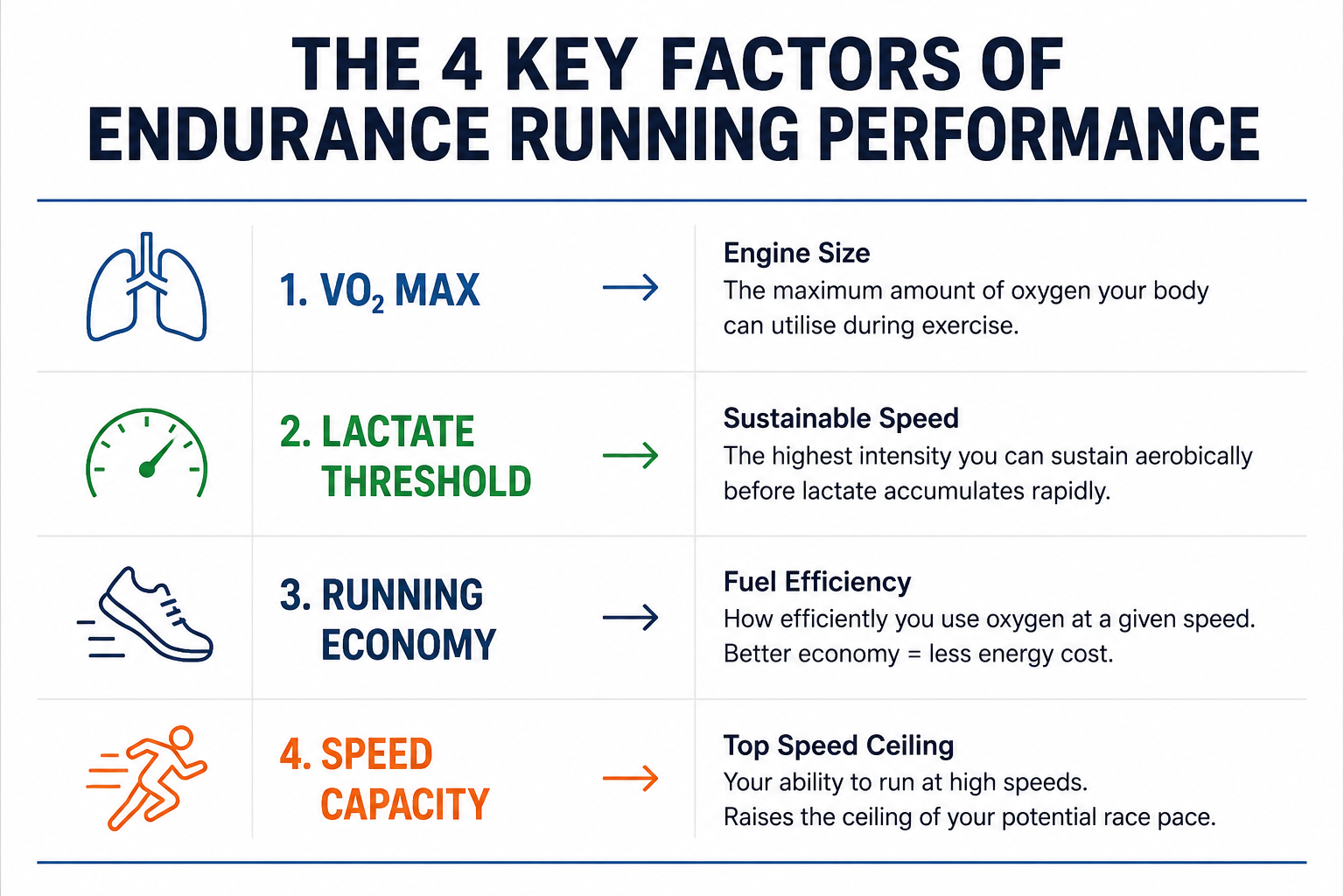
Endurance running performance is influenced by several key physiological factors. While many runners focus primarily on mileage or general fitness, performance is largely determined by four main components:
VO₂ max
Lactate threshold
Running economy
Speed capacity
Understanding how these systems work — and how to train them — can help improve everything from a 5 km personal best to marathon and ultra-endurance performance.
1. VO₂ Max
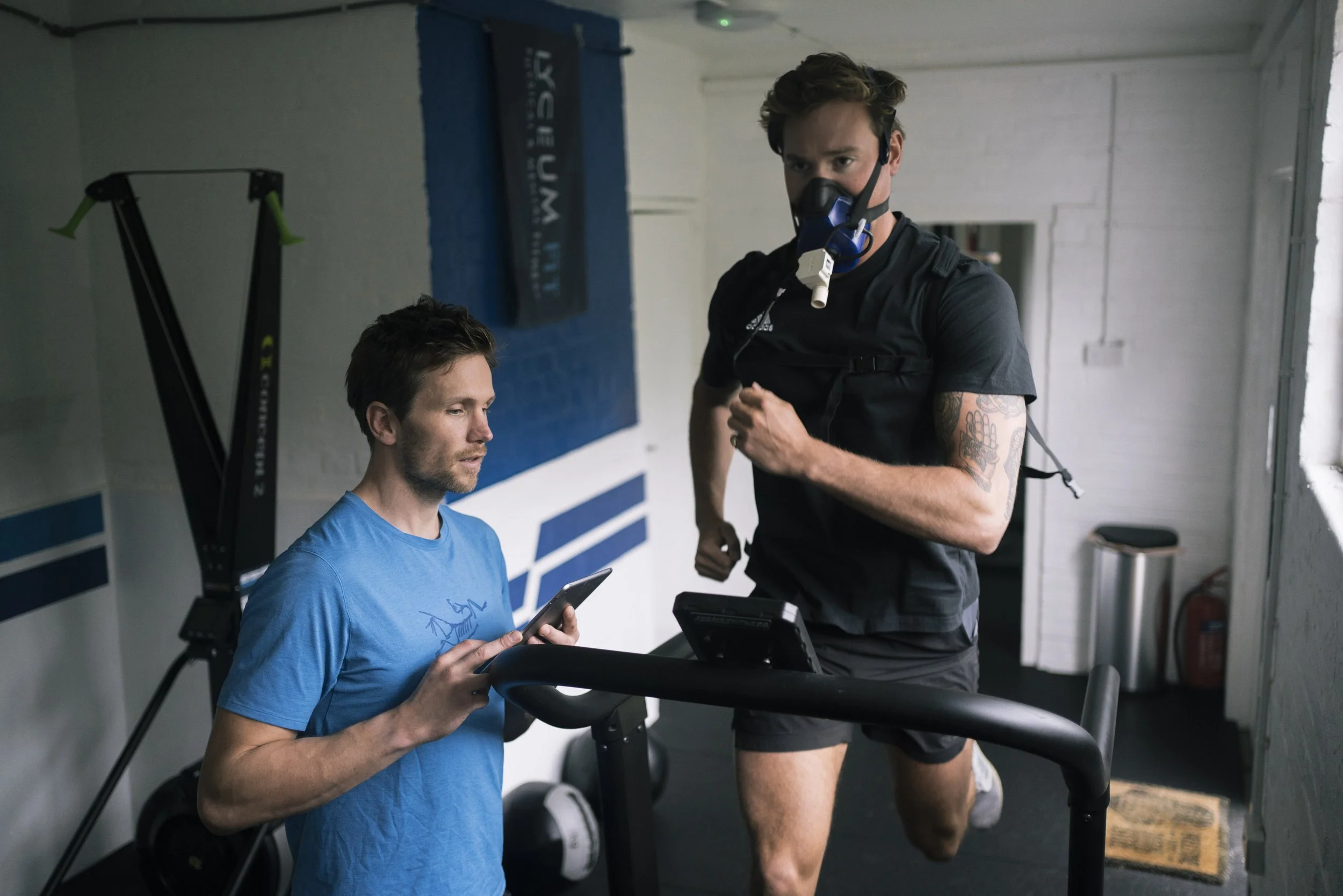
VO₂ max refers to the maximum amount of oxygen your body can utilise during exercise. It is often considered the upper limit of your aerobic energy system and can be thought of as the size of your engine.
VO2 max
Athletes with a higher VO₂ max generally have a greater capacity to produce aerobic energy. However, VO₂ max alone does not determine performance, as other factors influence how efficiently that capacity can be used.
A useful analogy is a car engine:
A larger engine has greater potential power output
But efficiency and sustainable speed still matter

2. Lactate Threshold
Lactate threshold refers to the exercise intensity at which lactate begins to accumulate faster than the body can clear it.
There are generally two recognised thresholds:
Lactate Threshold 1 (LT1): the point where blood lactate rises above baseline levels
Lactate Threshold 2 (LT2): the point where lactate accumulation rapidly increases and fatigue begins to rise significantly
LT1→LT2
When most runners talk about “threshold training” or training zones, they are usually referring to LT2, as this represents the highest sustainable intensity that can be maintained for a prolonged period.
For endurance athletes, lactate threshold is often one of the strongest predictors of performance because it reflects the highest percentage of VO₂ max that an athlete can sustainably utilise aerobically.
Using the car analogy again:
VO₂ max is the engine size
Lactate threshold is the sustainable cruising speed before the engine overheats
3. Running Economy
Running economy describes how much oxygen is required to run at a given speed.
Running Economy = VO2 / Speed Running
An elite runner will typically use less oxygen than a recreational runner at the same pace. This means they can maintain faster speeds while using less energy.
Running economy is influenced by:
movement efficiency
tendon stiffness
strength
plyometric ability
technique
fatigue resistance
This is one reason why strength and conditioning can significantly improve endurance performance.
4. Speed Capacity
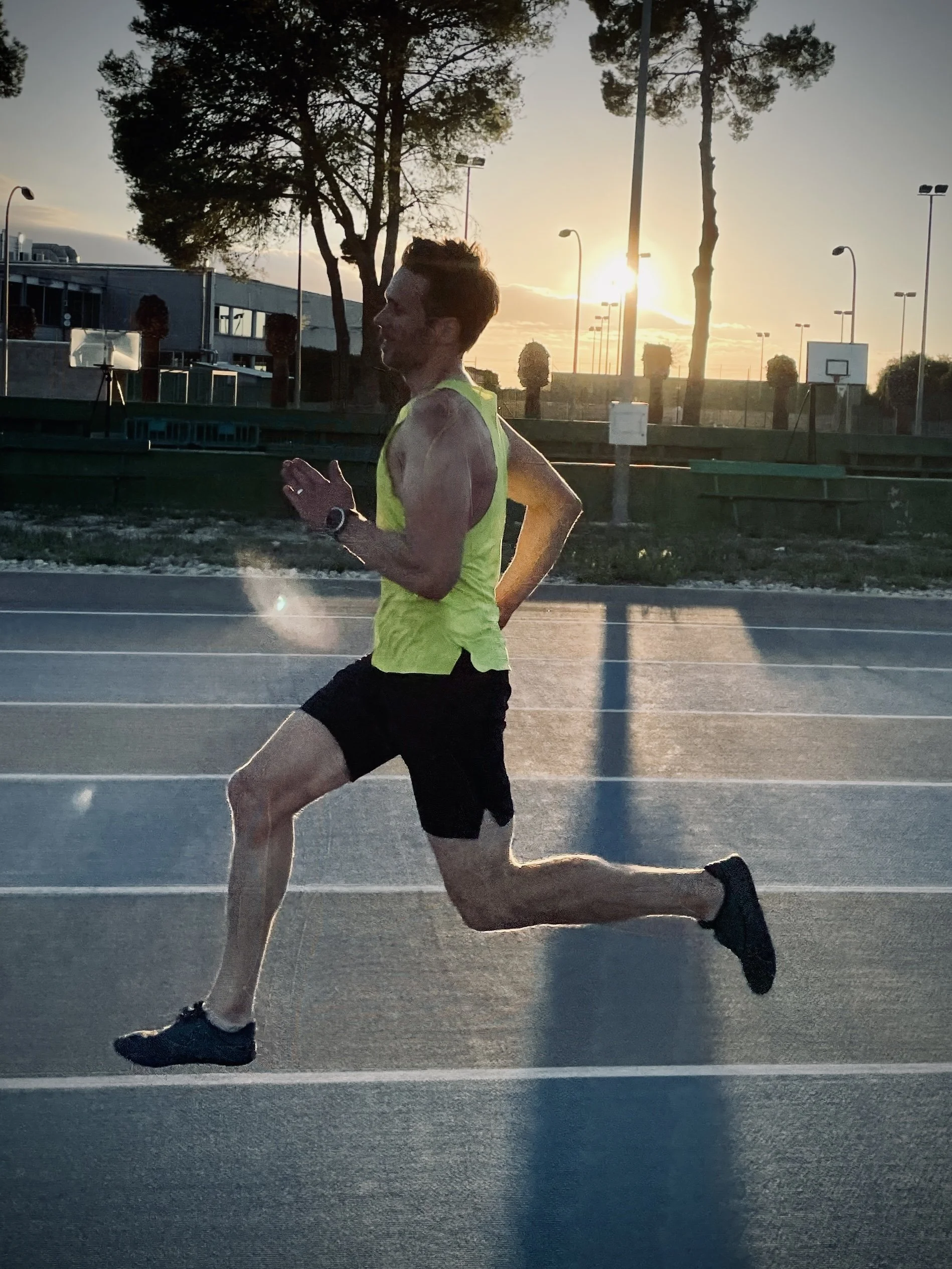
One often overlooked factor in endurance performance is speed capacity — an athlete’s ability to run at high speeds.
Your race pace is always a percentage of your maximum speed. Therefore, increasing maximum speed can raise the ceiling of sustainable race pace.
For example:
Athlete A max speed = 18 km/h
Athlete B max speed = 21 km/h
Even if both athletes race at the same relative intensity, Athlete B will still run faster.
This is why sprint training, strides, and neuromuscular work can benefit even marathon and ultramarathon runners.
In my experience coaching endurance athletes, many runners focus heavily on aerobic volume but neglect speed capacity, strength training, and running economy work. Improving these areas can often unlock performance improvements without simply increasing mileage.
How to Train These Performance Factors
To improve endurance running performance, training needs to expose the body to the specific physiological demands associated with each component. Over time, the body adapts to these training stresses and becomes more efficient at producing and sustaining speed.
VO₂ Max
3–5 minute intervals
High aerobic intensity efforts
Example: 5 × 3 min at vVO₂ max / 1:1 rest:work ratio
Lactate Threshold
Tempo runs
Cruise intervals
Sustained efforts near threshold pace
Example: 3 × 10 min threshold intervals / rest periods to maintain intensity (2-3mins)
Running Economy
Strength training
Plyometric training
Running drills
Sprint mechanics work
Volume at race pace
Speed Capacity
Sprint work (10–30 seconds) / long rest periods
Strides
Hill sprints
Neuromuscular training
Conclusion
Improving endurance running performance is not simply about running more miles. Performance is influenced by a combination of aerobic capacity, sustainable intensity, movement efficiency, and speed capacity.
While VO₂ max may determine the size of the engine, lactate threshold, running economy, and speed capacity determine how effectively that engine can be used.
Understanding and training all four components can help runners improve performance across everything from 5 km races to ultramarathons.
Frequently Asked Questions
What is the most important factor in endurance running performance?
Lactate threshold is often considered one of the strongest predictors of endurance performance because it reflects the highest percentage of VO₂ max that an athlete can sustain for prolonged periods.
How can I improve my VO₂ max?
VO₂ max can be improved through high-intensity aerobic interval training, such as repeated 3–5 minute efforts performed near maximal aerobic speed.
Why is running economy important?
Running economy determines how efficiently a runner uses oxygen at a given pace. Better running economy allows athletes to maintain faster speeds while using less energy.
Does sprint training help endurance runners?
Yes. Sprint training can improve neuromuscular efficiency, running mechanics, stride power, and speed capacity, all of which may improve endurance performance.
What is the difference between LT1 and LT2?
LT1 refers to the first rise in blood lactate above baseline levels, while LT2 represents the point where lactate begins accumulating rapidly and fatigue increases significantly.
Want to Improve Your Running Performance?
At Ultra Peak Fitness, I provide evidence-based endurance coaching and strength & conditioning for runners, hybrid athletes, and endurance events ranging from 5 km races to ultramarathons and mountain endurance challenges.
If you want to improve your endurance performance, reduce injury risk, and train with a more structured approach, get in contact to discuss coaching options.